Showing posts with label Food. Show all posts

Sunday, 3 July 2016

A Summer's Ramble and Fresh Spring Rolls

It's the beginning of July and I can feel the humid and hot air that I really dread.. As I may have written before how I hate summer in Japan some time ago, this time is no difference. More ramble and perhaps the same things. So forgive me for writing almost the same thing. Need to let go of this summer's heat.

Many Japanese I've met often ask "How do you manage to hold up in winter?", "Are you okay with winter?" and never ask "How do you survive summer?" for example. They seem to think that since I come from Indonesia, summer shouldn't be a problem to me.

Well, first of all the idea that all areas in Indonesia is hot is not true. Depending on the region. I come from Bandung, a city located over 700 meters above sea level. It's not too hot and not too cold. The average temperature is 23.6 °C (according to Wikipedia, which I think is quite accurate except for the fact that Bandung is not as cool as it was 25 years ago when my family moved there from a six-year nomadic life in Borneo). Dry season in Bandung is, as far as I can remember, cold and dry. The sun is very strong though it feels so nice when you're under a tree.

While summer in Japan is completely different from dry season in Bandung. It's hot (even during cloudy day) and humid. Even the wind is hot. I'm drenched in sweat day and night, night and day. Taking a shower 2 or 3 times a day helps a little. I often lose appetite and suffer what it's called natsubate or summer fatigue. It's the thing where I feel drowsy but can't sleep because of the heat. I feel hungry but all I want is just drinking.  I feel sluggish and heavy. So to survive this dreadful season, I choose very refreshing food that does not require a long cooking process (standing near the stove in summer is certainly a bad idea). I tried an Italian dish before. Tried it once but never did it again. I guess it's not so addictive as fresh spring rolls.

My husband and I really like fresh spring rolls. We love them! It's not difficult to make and basically just veggies. We always have the ones with shrimp when we eat at a Thai or Vietnamese restaurant, but making them by myself, I don't feel it's necessary to make exactly like them. So I just throw in some rice noodles (boiled), some carrots (julienned) and some coriander leaves. And voilà!

I love coriander leaves! The smell is just amazing! No need meat or shrimp. These three should be enough. And for the dipping sauce, (being lazy that I am when it comes to cooking especially in the summer) I just got ready-to-eat sauce in a bottle that I can buy at the nearest supermarket.


We never get tired of fresh spring rolls!


Wednesday, 4 April 2012

Martabak: Indonesian Savory Pastry マルタバ:インドネシアのピリ辛サンドウィッチ

I've been meaning to write about one of the most loved snacks in Indonesia. This morning my husband mentioned that one of our good friends has been waiting for the recipe of this snack. Since the first time she tasted it last year (at a pot luck party held by our Japanese class), she can't forget it and is waiting for me to share the recipe :-) Well before that, let's get to know a bit about this tasty snack :-)


私は、インドネシアで人気のこのおやつについて何か書こうかな、とずっと思っていました。すると今朝旦那が、私達の仲の良い友達の一人が、例のおやつのレシピを欲しがってるよ、と教えてくれました。昨年日本語クラスで開いたポットラック・パーティで初めて食べた時以来、彼女はその味が忘れられず、私がレシピを教えてあげるのを待っているらしいのです。その前に、ちょっとこのおやつについて、ご紹介しておきましょう。

Martabak: Arab influence on Indonesian culinary
マルタバ:アラブ由来のインドネシア料理


Besides Indian and Chinese influence, historically the people of the Indonesian archipelago also received Arab influence. One of them is a street food called 'martabak'.

インドと中国の影響だけではなく、歴史的に見てインドネシアは、アラブの影響も受けています。その一つが、街で売られている「マルタバ」というおやつです。

Martabak is one of the many popular street foods in Indonesia. The name derives from 'murtabak' or 'mutabbaq'. Basically it is a stuffed pastry or pancake. The name 'mutabbaq' means "folded". This particular snack is very popular too in Malaysia, Singapore, Brunei, Yemen, Thailand, and of course in Saudi Arabia too ( I think. Since the name is Arabic).

「マルタバ」とは、インドネシアの人気のおやつの一つです。その名前は「ムルタバ」または「ムタバック」という言葉から来ています。基本的にこれは、パンケーキの一種です。「ムタバック」という言葉は、「包む」という意味です。この食べ物は、マレーシアやシンガポール、ブルネイ、イエメン、タイ、そしてもちろんサウジアラビアなどでも、大人気です(この名前は、多分アラビア語です)。

The stuffing differs in different countries. In middle east probably it contains minced mutton, egg, garlic and onion. But in Indonesia it includes minced beef or chicken, spring onion, egg (chicken or duck).

中身は国によって、色々です。中東では多分、羊のミンチ、卵、にんにくと玉ねぎを使っているはずです。でもインドネシアでは、ミンチの牛肉や鶏肉、スプリングオニオン、(鶏またはがちょうの)卵を使います。

First they mix the stuffing which consists of minced beef or chicken, 2 eggs, chopped spring onions. These are mixed in a metal mug. When the ingredients are well-mixed, they add salt and pepper and mix them again.

まず、ミンチの牛肉か鶏肉、卵二個、刻んだスプリングオニオンを、混ぜ合わせます。金属製のボウルで混ぜるのです。上手に混ぜ合わせることが出来たら、塩と胡椒を入れて、更に混ぜ合わせます。

Next step is making the pastry sheet. The dough is usually prepared in advance. Perhaps the vendor makes the dough at home for the sake of efficiency. A piece of dough (as big as a fist) is flattened using palm. To make it thinner and larger, they toss the dough a bit. Somewhat like what professional pizza makers do but not toss it high in the air. Just a bit :-) When it's done, the flat dough is immediately transferred onto a flat hot-filled-with-oil pan. Before the pastry gets crisp, they add the stuffing and fold the pastry. Then they fry it until it is golden brown and crispy.

次に、皮を作ります。パン生地はあらかじめ用意しておきます。多分街のマルタバ屋さんは、仕事の効率を考えて、あらかじめ家で作っているんだと思います。そして、握りこぶしくらいのパン生地を手でこねて、平たくします。薄く、しかも大きく広げるために、彼らはそれをちょっと放り投げます。プロのピザ職人がやるような感じですが、あまり高くは放り投げません。ちょっとだけです。それが終わると、平たくなったパン生地をすぐに、油を引いたフライパンで焼きます。パン生地がパリパリになる前に、具を乗せて、パン生地で包みます。そして黄金色になってパリパリになるまで、フライします。


Martabak is usually eaten with pickles. The savory taste of martabak blends greatly with the sour pickles. It's hard for you to stop eating more and more and more (^_ ^)

マルタバはたいてい、ピクルスと一緒に食べます。ピリ辛のマルタバの味は、ピクルスの酸味とバッチリ合います。多分食べるのが止められなくなると思いますよ。

Great accompaniment to martabak: pickles made of cucumber, carrot, shallot, (sometimes whole chillies) and vinegar.
マルタバの偉大なるお供:キュウリ、ニンジン、シャロット、(時々唐辛子の塊)と酢で作ったピクルス

Sunday, 18 March 2012

A Visit to Home Country Part I 母国を訪ねて (その1)

After over 14 months since my last visit to Indonesia, I finally made another one last January.

前回インドネシアへ里帰りしてから14ヶ月、ついにこの一月帰国しました。

Traveling to the equatorial zone in winter was an amazing experience. I left Kurayoshi amidst the cold freezing air. Until Kansai airport I was fully layered in thick suede coat. 9 hours later I arrived at Jakarta's airport, enwrapped in thick humid air. The sound of people's chatters was buzzing in my ears. Everywhere flocks of people moving around dizzily. Quite an opposite to Kurayoshi's atmosphere.

冬の時期に赤道付近へ旅に出るのはちょっとした冒険です。倉吉を出た時、外はかなり冷え込んでいました。関西空港に着くまで私は分厚いスエードのコートを着込んでいました。その9時間後にジャカルタ空港へたどり着いたのですが、そちらはめちゃめちゃ蒸し暑かった!たくさんの人が大声で騒いでいるのが聞こえます。どこへ行っても人の波。倉吉とは全く逆です。ははは。

Not only the weather, my lifestyle changes when I am in Indonesia. One thing is that I always wake up early no matter how late I go to bed at night. The reason is simple. It is almost impossible to wake up late among the cock-a-doodle-dooing roosters, the sound of adzan. And most of all, food vendors who shout or make sound with their plates or wooden block trying to sell chicken porridge, spiced rice, steamed rice with curry, Chinese buns and so on and so forth. How can you stay asleep when the vendors are giving you images of mouth watering breakfast? :-)


天気だけではなく、インドネシアでは私のライフスタイルも変化します。まず、朝が早い。どんなに遅く寝床に着いても、です。理由は簡単。朝になるとそこら中でけたたましく鶏が鳴きまくりなので、遅く起きるのは無理です。それだけではありません。行商の人達が大声でフライパンやら拍子木を鳴らしてチキンのおかゆやスパイシーなご飯、カレー付きの蒸しご飯、レーズン入りの中国風蒸しパンなどなどを売りに来ます。こんな美味しそうなものを売りに来るような中で、どうして遅くまで寝ていられるか!


the infamous fried rice or nasi goreng
有名なインドネシアのチャーハン「ナシ・ゴレン」


Soto sulung: the savory beef soup with rice
「ソト・スルン」激辛ビーフスープとごはん
But my most favorite breakfast menu while at home is this: fried tempeh and steamed bananas. Hmmmm Yummmyyyy!!

でも私の自宅での最もお気に入りの朝食はこれ。テンペのフライと蒸しバナナです。うーん、美味しい!


Wednesday, 29 June 2011

Cool Cucumber Penne Salad for A Super Hot Summer Day 美味しい ^_^

Although this is my second summer in Japan, I can't say I'm half-way used to it. The high humidity is unbearable ( ̄へ ̄) 蒸し暑いね ( ̄へ ̄) Yesterday, I was munching on chocolate chip cookies while chatting with my husband. And I noticed that every chip on the cookie that I was holding was starting to melt!! I didn't even touch it! (●゚д゚●) That is how hot summer in Japan is!!

今回は日本での二回目の夏ですが、いまだに慣れないです。この湿度はたまりません。昨日、旦那と話をしながらチョコチップクッキーを食べていたのですが、持っていたクッキーのチョコチップが、暑さで溶け出しているのに気づきました。触ってないのにぃぃぃぃぃ。これが日本の暑さです。

When I'm complaining about the heat, people are wondering why. They think how come a person from a tropical country like Indonesia can't stand this heat. The thing is where I come from the dry is season is indeed hot but it's dry. Bandung is located in highland, surrounded by mountain range. Though the sun is scorching hot, the cool breeze blows and brings relief. When I explain this, they begin to understand why my tropical body is screaming for help!! \(>o<)/

暑さについてゴネると、皆さん不思議に思われるようです。何でインドネシアみたいな南の国から来た人が、暑さに弱いの?その理由はこうです。私がやってきたところは乾季があって、もちろん暑いのは暑いわけですけれど、実際はカラッとしているのです。特にバンドンは高地にあって、山に囲まれています。日差しは強いですが、風が爽やかなのです。こうご説明すると、なぜ私の熱帯型の体が日本で悲鳴を上げているのか、ご理解いただけるでしょう!

Anyway, apart from the sultry summer, the other thing that I am still learning to adapt is cooking. I sometimes cook something that, according to my husband, is not suitable for summer. Some dishes make his body feel dull. I myself never feel that way. Or rather, have not yet felt it. Or maybe my body is just too stupid or too slow to react (^-ェ-^).(my husband is a so-called Qui-Gon healer so it seems his body has totally changed because of that)

このムシムシする夏以外に私が慣れようとトライしているもう一つのことといえば、料理です。私が作るいくつかの料理は、旦那に言わせれば、夏にはふさわしくないそうです。それらを食べると、だるくなるんだとか。私はそんなことは感じませんが。あるいは、今まで感じたことはありません。もしかしたら、私の体はナマケモノになっていて、反応するのが遅くなっているのかしら?(因みに旦那は気功の施術家なので、練習のせいで体質が変わってしまっているようです)。

Before I moved to Japan, I'd never thought that there are so many things that rely on seasons in a four-seasoned country. In Indonesia I eat Nasi Goreng or Fried Rice anytime I want  (´・ω・`;) even in a hot day!

日本へやってくる前は、四季に合わせてこんなにもたくさんの食べ物があるなんて、考えても見ませんでした。インドネシアでは、ナシゴレン(焼飯)はいつだって食べます。暑い日だって!

So today I decided to cook something cold for dinner. I've always loved pasta so why not having cold pasta? After about a few-minute browsing on the net, I found one! (I can never be thankful enough for the invention of internet!!) It's called "cool cucumber pasta" from: http://allrecipes.com/recipe/cool-cucumber-pasta/ 
Sounds so refreshing in this sultry weather. But since I don't have mustard, garlic salt and parsley, I decided to use whatever available in the fridge and voila! Cool Cucumber Pasta a la Me!! (^-ェ-^)

というわけで今日は、夕食には涼しそうなものを作ることにしました。私はいつだってパスタが好きなので、冷たいパスタはどうかしら?数分間ネットをチェックしてみると、見つけました!(ネットに感謝!)。それは、「冷たいキュウリパスタ」です。この蒸し暑い天気には、ぴったりかも。でも、カラシやガーリックソルト、パセリがないので、冷蔵庫にあるものは何でも使って、ソレモドキにしてみることにしました。

Cool Cucumber Pasta a la Me

And to my surprise, my husband loved it!! He said "美味しいこれは" When he says that, I know it is ヽ(*⌒∇⌒*)ノ
意外にも、旦那の口に合ったようです。彼は言いました。「美味しいこれは」。そういう時は、たいていそうなのです!

Monday, 27 June 2011

Of Samosa and Indian cuisine (サモサとインドの料理に就いて)

I have a habit of visiting my parents in-law every weekend with my husband. They live in a town called Kotoura, about 30-minute drive from Kurayoshi where my husband and I live.

It's a short visit but it's a nice moment where we have dinner together with お父さん and お母さん and お祖母さん (father and mother and grandmother).

During dinner we eat and chat. Though it's actually my husband, parents in-law, and grandmother who do the talking most of the time. I am more of a listener as my Japanese is waaaaaay from being fluent. But I kind of can tell what they're talking about. Sometimes, my husband translates for me. But if it's too long he doesn't. Now I'm taking a Japanese lesson once a week so it's getting better. Yesterday, grandmother and I had our first conversation (@⌒▽⌒@) Well...not really a conversation. It was more like Q&A - a short one. But it was really nice because it was the first time we'd communicated without an interpreter (a.k.a. my husband). Grandmother pointed at the dish I'd made asking, "Harumaki?" And I said, "hai." And then I said again, "Jagaimo", which means potato. I know it sounds silly to be overjoyed by this but it meant a lot to me (@⌒▽⌒@) because I could say something and not only answer (@⌒▽⌒@)

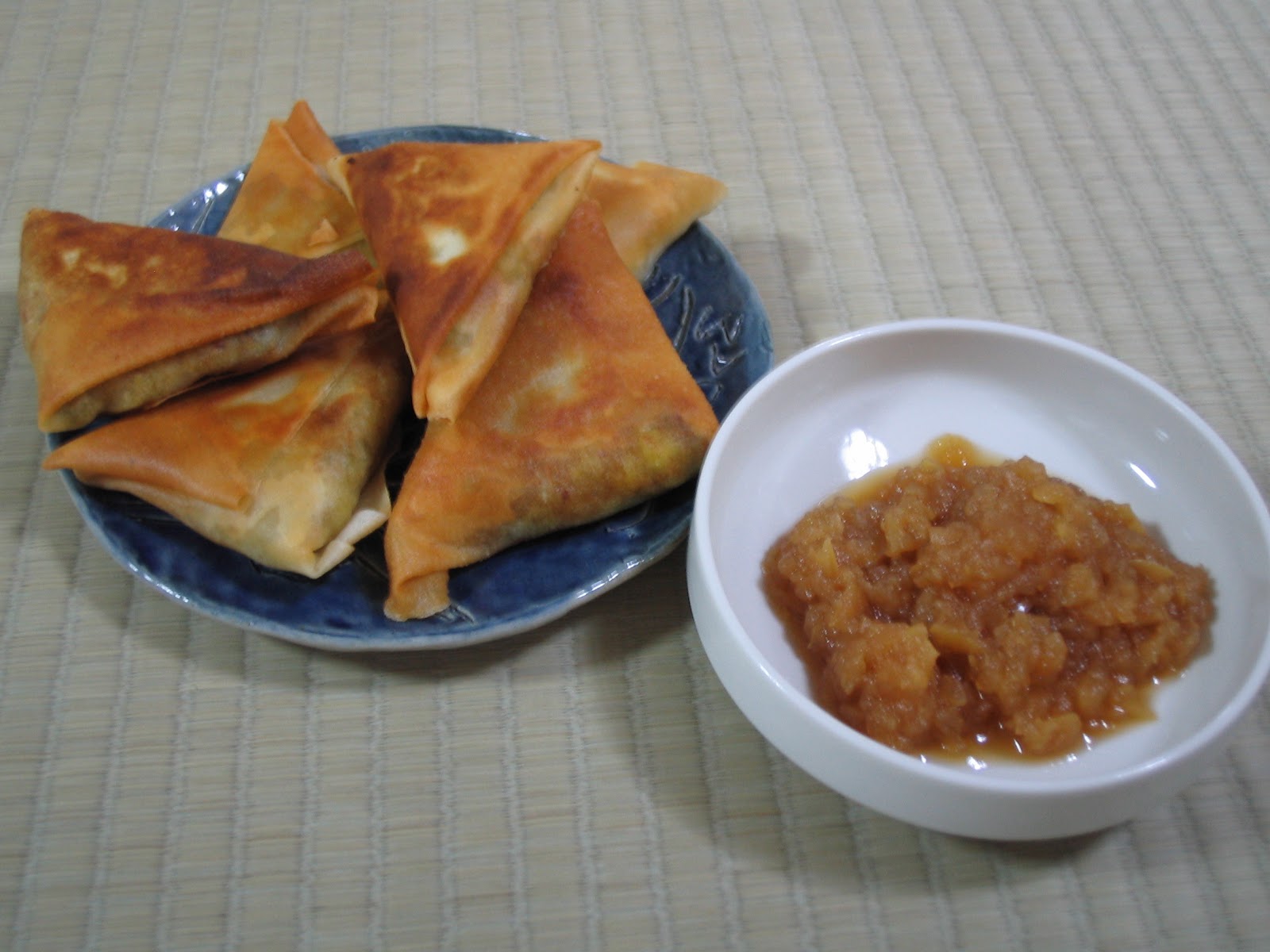
The weekend dinner is also a time where I get to cook exotic dishes. Grandmother is especially fond of them. She's 94 years old now and isn't strong enough to take a trip to a restaurant for a special meal except for eating ramen because it doesn't take a long time to reach that restaurant. So, I try to cook different kind of dishes that she might like such as Indonesian, Italian, Chinese, etc. And yesterday I made Samosa , an Indian stuffed pastry, with apple chutney. And she loved it!! (@⌒▽⌒@)  I was sooo glad ヽ(‘ ∇‘ )ノ

My homemade vegetable samosa and apple chutney
Samosa is the second Indian dish I've tried my hand at cooking besides vegetable curry. I've always loved Indian dishes. I love the smell of spices used in the dishes. It's intoxicating and exotic. Even the ice cream - kulfi - also includes some exotic spices. Plus I don't need to make the dish look pretty. I'm not that artistic when it comes to decorating food (I have to admit that I don't have the patience for decorating food :D). And the fact that now my husband and I have to travel far to enjoy an Indian meal, I might as well make it myself.

Talking about Indian food, funny thing is that  while living in Tokyo, I went to Indian restaurants more than I had been to in my home country, Indonesia. I was surprised at how easy to find an Indian restaurant in Tokyo. It seemed to me that every 区or ku has at least one Indian resto. From the like of soba stand - unassuming, inexpensive but delicious - to the expensive, and stylish one in Ginza for instance. Even at the cafeteria of Shibuya Town Hall, they served Indian curry!! I find it really interesting.

In contrast, it is not so in Indonesia, my home country, even though Indian culinary is popular in Japan. I find it baffling that despite having been heavily influenced by India historically and having  most of the spices in common, Indonesian taste buds still seem hard to agree with Indian cuisine. Many of Indonesian dishes are influenced by Indian, but Indian cuisine itself fails to become popular in Indonesia. For over 20 years having lived in Bandung, my hometown, I only found 2 Indian restaurants.

One inexpensive Indian restaurant I frequented back in my home country interestingly belonged to a Chinese Indonesian couple. They had lived in Singapore before, where they developed a craze for Indian dishes and decided to run an Indian restaurant when they moved back to Indonesia.

My favorite Indian restaurant in a shopping mall in Bandung. .

The lady owner. She's very friendly and warm.
I haven't visited the restaurant for over 4 years now, I think. I don't know if they're still running the business or not. I really hope they are. It's a pity if they don't because their food is so yummy and, most importantly, inexpensive.